
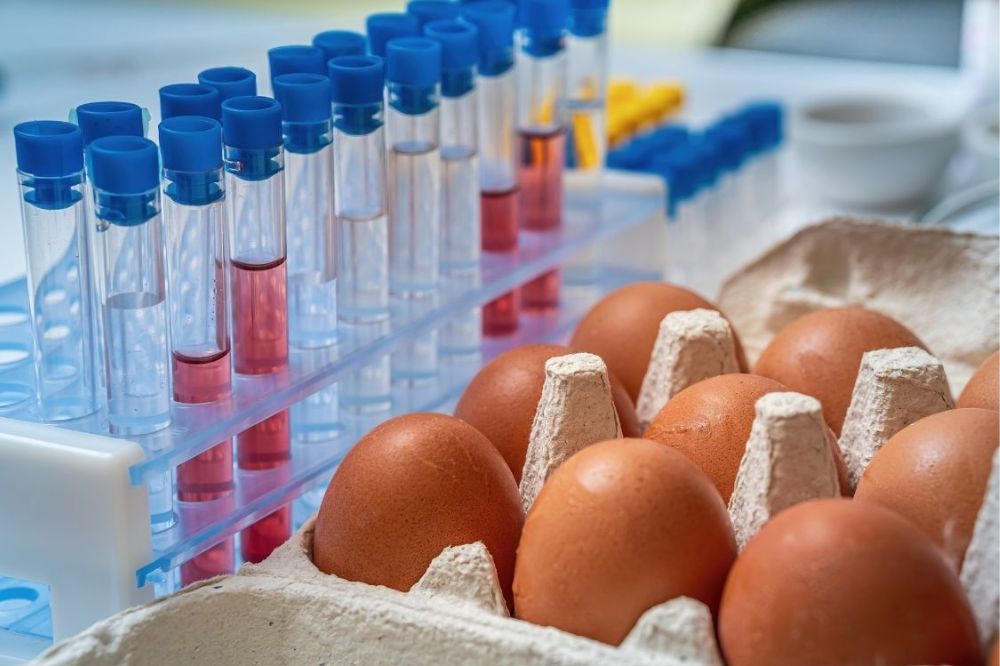
Acting on information from their Food Standards Agency and UK Health Security Agency partners regarding an increase in Salmonella cases nationally, Horsham District Council is taking action to remind food businesses of the bacterial risks associated with fresh shell eggs and the steps they should be following to avoid infection.
Salmonella contamination is historically a known hazard associated with eggs and the UK has worked intensively to reduce the risk associated with those laid from British flocks. However, contamination is still widespread in eggs imported from other countries, with numerous outbreaks of the disease linked to eggs laid in Spain, Poland and the Netherlands in particular.
Horsham District Council Cabinet Member for the Environment, Recycling and Waste Cllr David Skipp commented: “Following the UK’s own struggles with Salmonella in eggs, the Lion Brand scheme was introduced across the country which included the inoculation of flocks against the disease. This proved hugely successful in permanently reducing the prevalence of Salmonella in British eggs to this day.
“To this end, we always recommend that food businesses only purchase products from reputable suppliers. This is a very important check, especially if your customers could include very young or immunocompromised people, or if you are making products where the egg is consumed raw or only lightly cooked, such as fresh mayonnaise or souffles.
“I would recommend that food businesses look at the latest guidance issued by the FSA and encourage all food businesses and the wider public to review its principles if they use fresh shell eggs. Key points of importance it raises include ensuring that hands are thoroughly washed after touching fresh eggs; and to not use any eggs which are visibly dirty due to the risk of bacteria transferring through the permeable shell and contaminate its interior.
“The watch word for consumers is to only buy Lion Brand eggs in order to protect themselves and their families from potential infection.”