
Wilder Horsham District's latest annual report highlights another year of significant progress in restoring habitats, supporting communities and strengthening partnerships across the District.
From new wetlands and hedgerows to volunteer-led conservation projects, the programme continues to build a connected Nature Recovery Network for people and wildlife alike.
Nature recovery efforts extended to 2028
A partnership between Horsham District Council and the Sussex Wildlife Trust, Wilder Horsham District was established in 2020 to help reverse wildlife decline and create a resilient network of habitats across the district. Following a successful review, the project has been extended until March 2028, enabling the team to continue supporting landowners, parish councils and communities in delivering nature recovery at scale
Nearly 900 hectares influenced for nature
During 2025/26, the team engaged with 56 landholdings covering approximately 890 hectares and provided advice across a wide range of sites, including 15 Local Wildlife Sites. Most of the sites supported contribute directly to nature connectivity, helping wildlife move more easily across the landscape.
Practical habitat improvements included:
- 446 trees planted
- 1,459 metres of hedgerows planted or restored
- 286 metres of dead hedges created or repaired
- Nine leaky dams installed
- 72 ponds and scrapes created
- Nine sites cleared of invasive species
- Numerous bird, bat and insect habitats installed
- The team also continued to support natural succession projects across grassland, scrub, woodland, heathland and orchard habitats, helping create more diverse landscapes capable of supporting a wider range of wildlife.
Major projects focus on wetlands and connectivity
Much of the year's work centred on improving wetland habitats and strengthening ecological links between key areas of the district. Projects at sites including Well Cottage in Wineham and The Pools in Henfield created new scrapes, restored ponds and enhanced meadows and hedgerows. These improvements benefit wildlife while also helping to manage flood risk by slowing water movement across the landscape.
The River Adur corridor emerged as a major focus for future large-scale nature recovery, with several ambitious wetland and natural flood management projects under development. These proposals align with wider plans for river restoration and catchment-scale habitat recovery.
Volunteers at the heart of success
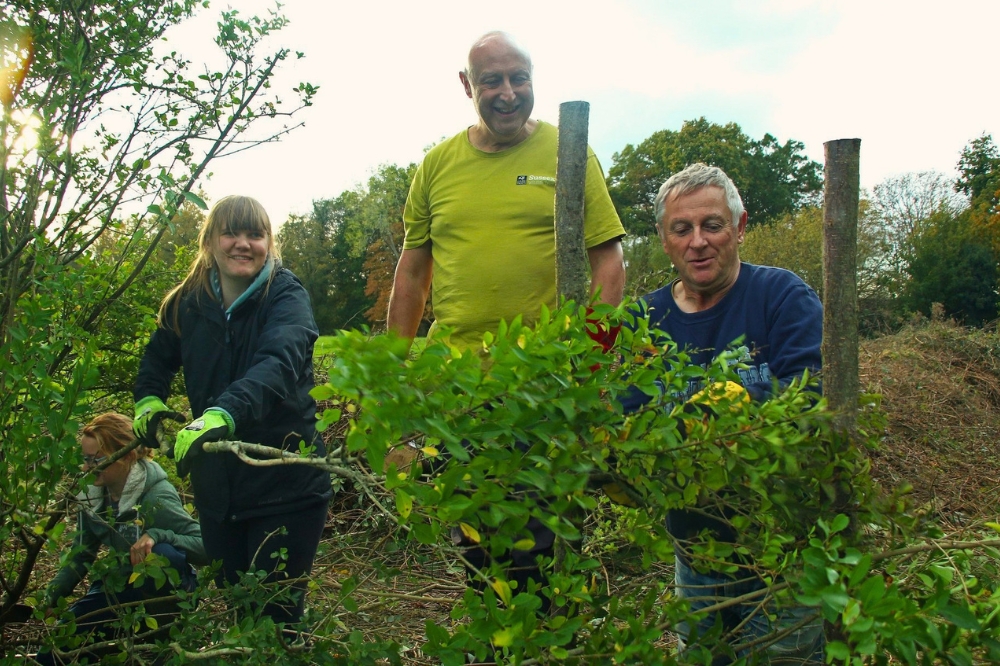
Volunteers continued to play a crucial role in delivering practical conservation work. Across 30 work parties, volunteers contributed 1,534 hours, representing an in-kind value of more than £30,000.
Activities ranged from hedge laying and tree planting to tackling invasive species such as rhododendron and Himalayan balsam. These efforts have enabled landowners and community groups to undertake conservation projects that would otherwise be difficult to achieve.
Funding local action through the Nature Recovery Award
The project's flagship Nature Recovery Award, funded by Horsham District Council and managed by the Sussex Wildlife Trust, continued to support grassroots conservation initiatives. During 2025/26, £25,977 was awarded to nine successful projects focused on habitat creation, restoration and connectivity.
Funded activities included woodland improvement, pond restoration, grassland enhancement, wildlife habitat installation and biodiversity improvements on community land.
Since its launch, the award scheme has become an important mechanism for enabling local people and organisations to take practical action for nature.
Building stronger communities for nature
Wilder Horsham District's work extends beyond habitats to strengthening the people and organisations that care for them. During the year, the team engaged with community groups, parish councils and partner organisations across the district. By the end of 2025/26, the project had worked with 30 parish councils, representing 86% of the district.
Support included ecological advice, networking opportunities, mentoring for volunteer groups and collaborative projects to improve community-owned green spaces. The team also expanded efforts to make volunteering more accessible and inclusive, including outreach to young people and underrepresented groups.
Strong partnerships deliver long-term impact
Partnership working remains central to the programme's success. Throughout the year, Wilder Horsham District through the Sussex Wildlife Trust collaborated with organisations including Natural England, National Trust, RSPB, Woodland Trust and the Knepp Wildland Foundation, among many others. These partnerships help align local projects with wider regional nature recovery initiatives.
At Horsham District Council, progress also continued towards ensuring all designated council-owned land is managed positively for nature. By the end of the year, 96.4% of designated council land was under active management plans or stewardship schemes.
Looking ahead
The achievements of 2025/26 demonstrate a growing momentum for nature recovery across Horsham District. With an extended project timeline, strong community support and increasing engagement from landowners and partners, Wilder Horsham District is helping create a more connected, resilient landscape that benefits both wildlife and local communities.
As pressures from biodiversity loss and climate change continue, the report shows that collective local action can make a measurable difference and that nature recovery is becoming firmly embedded across the district.
Apply for a Nature Recovery Award
Some projects need a little financial support to succeed. We offer advice, support and a grant of up to £5,000 for on-the-ground works that create, enhance, enlarge or connect habitats in the Horsham District.
Find out more about the Nature Recovery Award
Read the Wilder Horsham District Annual Report 2025-2026
Photo Credit: Sam Roberts, Sussex Wildlife Trust