
Horsham Park
In this section
Avenue of Trees Project 2026
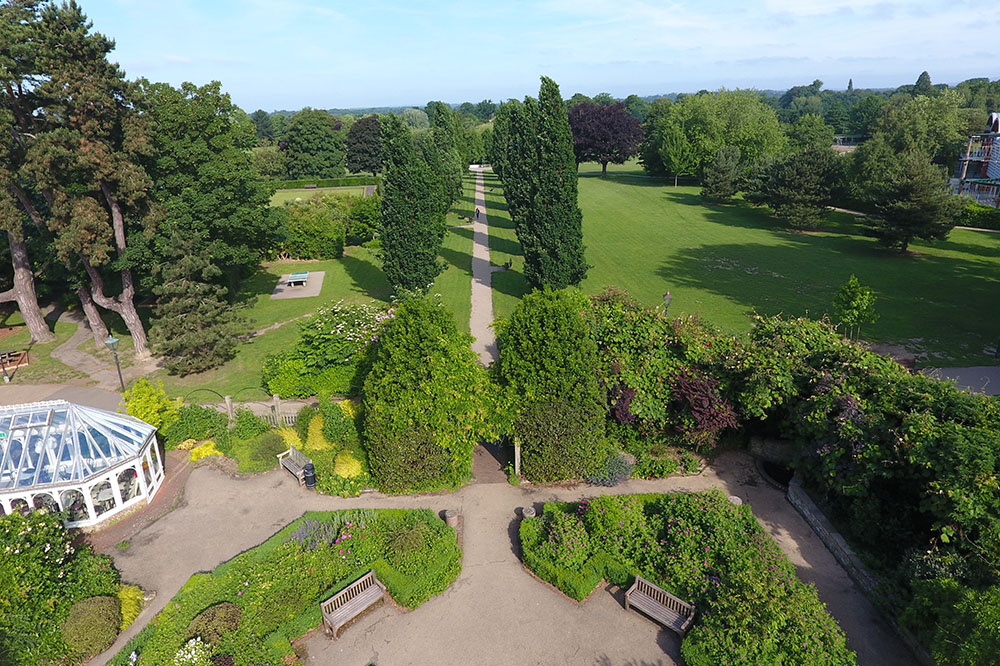
Regular visitors to Horsham Park, will have noticed that the avenue of Fastigiate oak trees lining the footpath from Park House Garden to the Pond are now in a significant state of decline.
Many of these trees, planted in the 1980’s, have inherent weaknesses presenting in the join between the branch and truck. This has led to several having to be braced and one felled.
From January 2026 (as the weather allows), we will be undertaking work to create a new avenue of trees in the park that is resilient, long lasting and adaptive to our changing climate.
The first element of which will be to interplant native Hornbeams at regular intervals in between the existing trees, to ultimately replace them.
Native Hornbeams (Carpinus betulus) have been selected as the choice of replacement tree.
Classified as a principal tree (one that is widely used in the region), they are well suited to urban environments and adaptable to the clay soil that is prevalent in the park.
This hardy tree variety has a wide spreading canopy with minimal leaf drop, which will provide additional shade in the warmer summer months. They are considered an effective species for carbon capture due to their rapid growth rate, dense wood and long life. It is estimated that six tonnes of carbon can be absorbed and stored during one tree’s lifetime.
In addition, the dense foliage and seeds provide food and shelter for a variety of wildlife.
Hornbeams also provide a historical link to the district playing a crucial role in the iron industry, much of which has shaped the Horsham landscape.
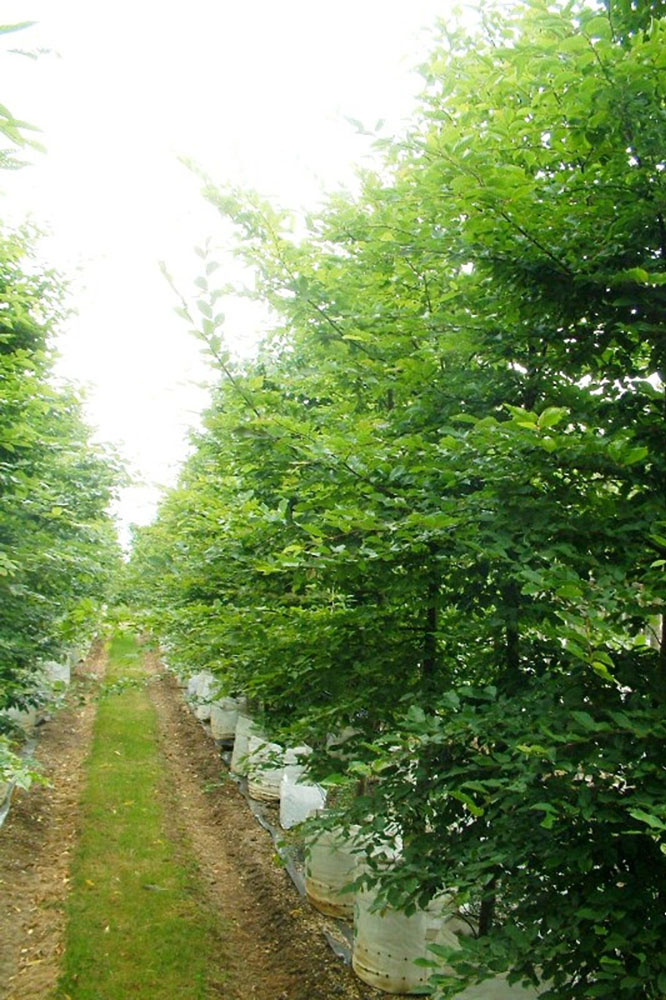
The new trees are approximately three years old and at a height of 3 meters. They will be planted with water bags and tree protections will be installed to ensure they establish and thrive. When fully established, Hornbeams typically live more than 150 years.
Sadly the existing Oaks are all now showing signs of decline and despite our best endeavours over the years (bracing, creating circular beds and removing branches), we estimate that in the next five years all the trees will need to be removed.
We are working to have a resilient alternative in place.
We know that the avenue of trees is a major focal point within the park and that the area will look different as and when they are removed. Our intention is to remove them selectively (not all in one go), with the trees going in parallel to retain some uniformity. This will be done as and when it is felt to be appropriate.
We estimate it may take 10 years for these trees to develop, into a recognised avenue with a height of 10 meters but our aim is to create a sustainable avenue for future generations.
Hornbeams are classified as a principal tree (one that is widely used in the region), and provide a historical link to the district, having played a crucial role in the iron industry, much of which has shaped the Horsham landscape.
Hornbeams are resilient and adaptable
They are exceptionally tough trees, that are less susceptible to storm and wind damage. Their deep root system and greater moisture tolerance, makes them more resilient to periods of drought or waterlogged soil. They can also thrive in the clay soil conditions that are prevalent in the park. As they grow, the dense oval canopy will provide shade.
They are visually appealing
Although they are a deciduous tree (one that sheds its leaves annually), they often retain their dried golden-yellow to brown leaves throughout the winter.
In autumn the leaves turn dramatic shades of orange and yellow, providing seasonal colour. The bark is typically smooth and light grey, resembling the texture of iron.
They support a host of Wildlife
Hornbeams provide both food and shelter for many species including birds, mammals and insects. The dense foliage is perfect for nesting, while the seeds, catkins and nuts are valuable food sources.
The trees will be planted with watering bags which will be routinely monitored. We will also be installing tree guards to shield the trees from physical damage.
Should a tree fail to establish for any reason it will be replaced by another of the same age and size.
To accommodate the new trees, we will be reducing the width of the laurel hedge (closest to the path by the bike chicane, outside Park House Garden). This will reduce in width from approximately 3 meters to 1 meter.